
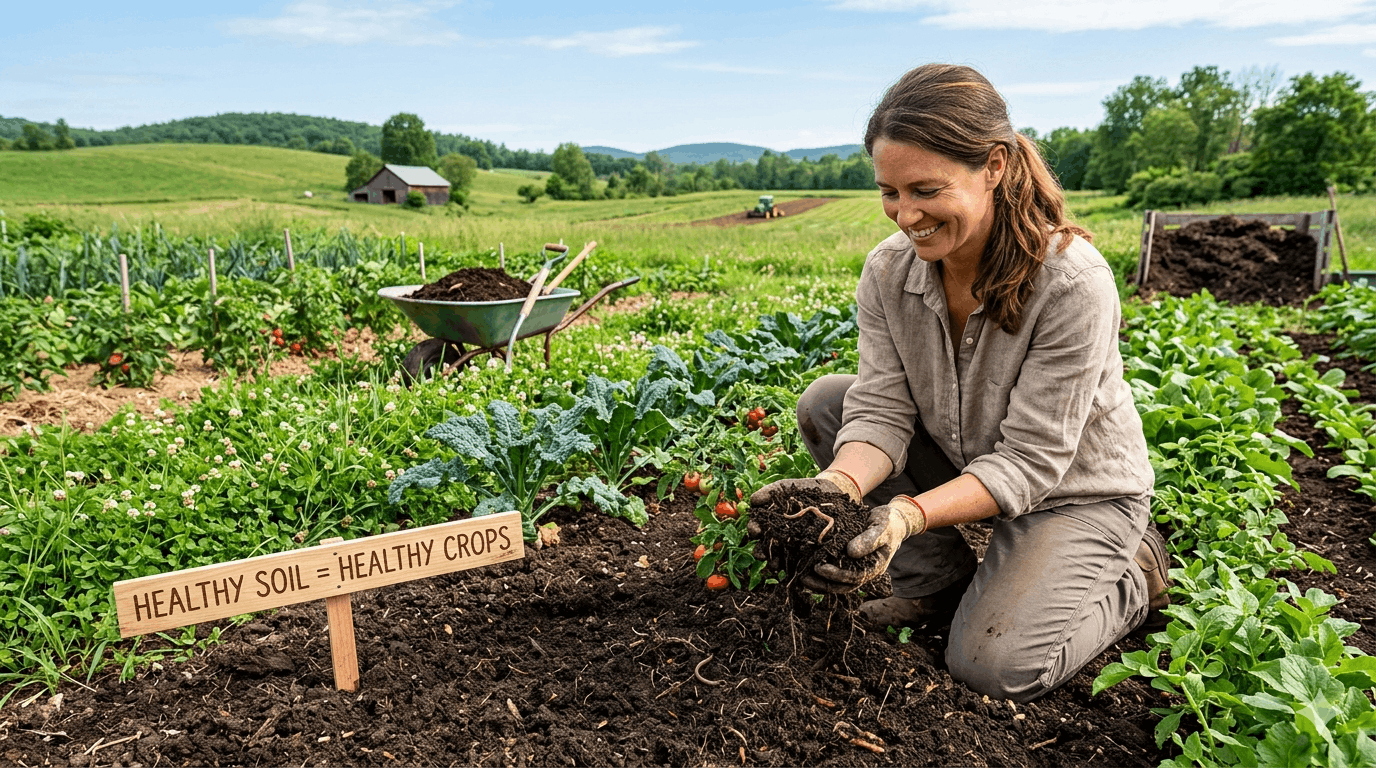
Organic farming is gaining popularity in India as farmers look for sustainable, cost-effective, and eco-friendly ways to grow crops. In this guide on 10 Organic Farming Tips in India, we will explore practical methods that can help farmers improve their yields while protecting the environment. With rising input costs and declining soil fertility due to chemical farming, switching to organic methods can improve long-term productivity and profitability.
Organic farming focuses on natural inputs, soil health, and biodiversity. Whether you are a beginner farmer or already practicing agriculture, these 10 organic farming tips will help you improve your results step-by-step.
1. Improve Soil Health Naturally
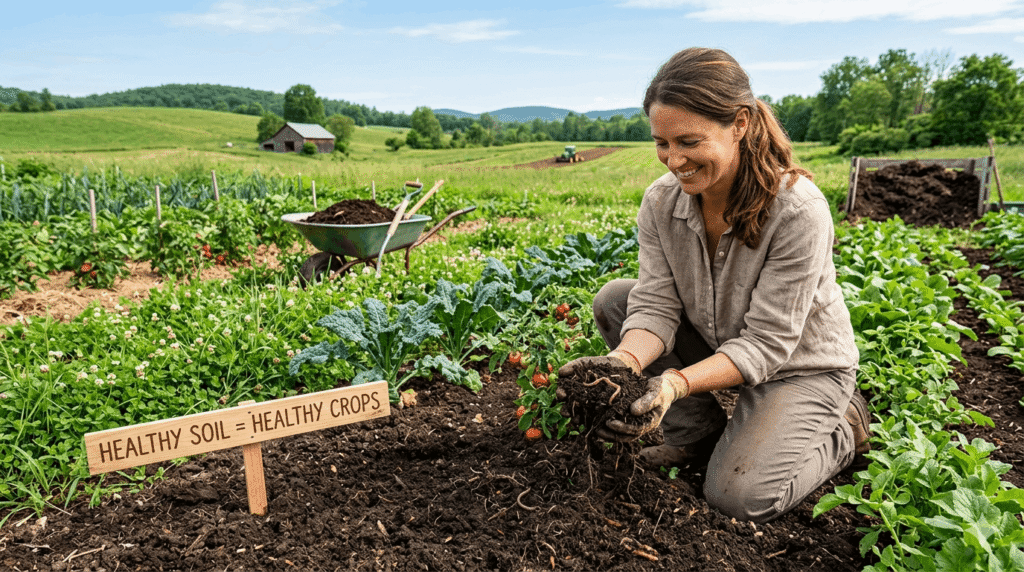
Healthy soil is the backbone of successful organic farming. If your soil is rich in nutrients and microbial life, your crops will naturally grow stronger, resist diseases better, and produce higher yields. In organic farming, the goal is not just to feed the plant but to nourish the soil ecosystem.
Excessive use of chemical fertilizers in India has led to soil degradation, reduced fertility, and lower water-holding capacity. That’s why improving soil health naturally is the first and most important step in applying these 10 Organic Farming Tips in India.
Why Soil Health Matters in Organic Farming
- Improves nutrient availability for crops
- Enhances soil structure and aeration
- Increases water retention capacity
- Promotes beneficial microorganisms
- Reduces dependency on external inputs
When soil is alive with microbes, it acts like a natural engine that continuously supplies nutrients to plants.
How to Improve Soil Health Naturally
1. Use Compost and Farmyard Manure (FYM)
Compost and FYM are rich in organic matter and essential nutrients like nitrogen, phosphorus, and potassium.
- Compost can be made using crop residues, kitchen waste, and dry leaves
- FYM (cow dung manure) improves soil texture and microbial activity
- Apply 5–10 tons per acre depending on soil condition
Regular use of compost helps restore soil fertility without harming the environment.
2. Add Vermicompost Regularly
Vermicompost is one of the most effective organic inputs in modern farming.
- Produced using earthworms
- Rich in enzymes, nutrients, and beneficial bacteria
- Improves soil aeration and root growth
Apply vermicompost during land preparation or near plant roots for better results.
3. Practice Green Manuring
Green manuring involves growing specific crops and then mixing them into the soil before flowering.
Common crops used in India:
- Sunhemp
- Dhaincha
- Cowpea
Benefits:
- Adds nitrogen naturally to the soil
- Improves soil structure
- Increases organic matter
This method is especially useful before planting main crops like rice or wheat.
3. Practice Crop Rotation
Crop rotation is one of the most effective and time-tested techniques in organic farming. It involves growing different types of crops in the same field across different seasons instead of repeating the same crop again and again.
Continuous cultivation of the same crop (monocropping) leads to nutrient depletion, soil fatigue, and increased pest attacks. That’s why crop rotation is a key strategy in these 10 Organic Farming Tips in India for maintaining soil fertility and reducing input costs.
Why Crop Rotation is Important
- Prevents nutrient depletion in soil
- Breaks pest and disease cycles
- Improves soil structure and fertility
- Reduces dependency on fertilizers
- Increases overall farm productivity
Different crops have different nutrient requirements. Rotating them helps maintain a natural balance in the soil.
Best Crop Rotation Examples in India
1. Wheat → Legumes (Gram, Peas)
- Wheat consumes nitrogen from the soil
- Legumes fix nitrogen back into the soil
This cycle naturally restores soil fertility.
2. Rice → Vegetables (Tomato, Onion, Brinjal)
- Rice requires high water and nutrients
- Vegetables use nutrients differently and improve soil diversity
3. Maize → Pulses → Oilseeds
This 3-step rotation helps maintain balanced nutrient usage and improves yield.
Role of Legumes in Crop Rotation
Leguminous crops like gram, lentils, and peas have a unique ability to fix atmospheric nitrogen through root nodules.
Benefits:
- Naturally increases nitrogen in soil
- Reduces need for fertilizers
- Improves soil health for next crops
Practical Tips for Farmers
- Plan your crop cycle at least 1 year in advance
- Avoid planting crops from the same family consecutively
- Include at least one legume crop in rotation
- Monitor soil condition regularly
Conclusion for Crop Rotation
Crop rotation is a simple yet powerful method to improve soil fertility and reduce pest problems. It requires planning but delivers long-term benefits without extra cost.
4. Use Natural Pest Control Methods
Pest management is one of the biggest challenges in farming. While chemical pesticides provide quick results, they can harm human health, kill beneficial insects, and damage the environment.
Organic farming focuses on natural pest control methods that are safe, effective, and sustainable. This makes pest management an essential part of these 10 Organic Farming Tips in India.
Why Avoid Chemical Pesticides?
- Harmful to human health
- Kill beneficial insects like bees and earthworms
- Lead to pesticide resistance in pests
- Increase farming costs over time
Natural methods, although slower, are safer and more sustainable.
Best Natural Pest Control Methods
1. Neem Oil Spray
Neem oil is one of the most popular organic pesticides in India.
- Works against a wide range of pests
- Disrupts insect growth and reproduction
- Safe for plants and beneficial insects
Usage: Mix neem oil with water and spray weekly.
2. Garlic-Chili Spray
A simple homemade solution that repels pests.
Ingredients:
- Garlic
- Green chili
- Water
Benefits:
- Acts as a natural insect repellent
- Easy and low-cost solution
3. Cow Urine-Based Pesticides
Traditional Indian farming uses cow urine as a natural pesticide.
- Has antibacterial and antifungal properties
- Strengthens plant immunity
- Cost-effective for farmers
4. Traps (Sticky & Pheromone Traps)
These traps help monitor and control pest populations.
- Sticky traps catch flying insects
- Pheromone traps attract specific pests
Advantage:
They reduce pest population without using chemicals.
Integrated Pest Management (IPM) Approach
For best results, combine multiple methods:
- Use natural sprays
- Install traps
- Encourage beneficial insects
- Maintain field hygiene
Important Note (Realistic Expectation)
Natural pest control methods may require regular application and monitoring. Results are not instant, but they are safer and more sustainable in the long run.
Conclusion for Pest Control
By adopting natural pest control methods, farmers can protect crops while maintaining ecological balance and reducing costs.
5. Adopt Mixed Cropping or Intercropping
Mixed cropping (or intercropping) involves growing two or more crops together on the same field at the same time. This method mimics natural ecosystems and reduces farming risks.
Instead of relying on a single crop, farmers can diversify production, which is a smart strategy in these 10 Organic Farming Tips in India.
Benefits of Mixed Cropping
- Reduces risk of total crop failure
- Improves soil fertility
- Controls pests naturally
- Maximizes land use efficiency
- Provides multiple income sources
How Mixed Cropping Works
Different crops complement each other:
- One crop may fix nitrogen
- Another may repel pests
- Another may provide shade or support
This creates a balanced farming system.
Best Intercropping Examples in India
1. Maize + Beans
- Beans fix nitrogen
- Maize uses nitrogen efficiently
2. Cotton + Groundnut
- Groundnut improves soil fertility
- Cotton benefits from improved nutrients
3. Sugarcane + Vegetables
- Vegetables grow in early stages
- Sugarcane grows later, maximizing land use
Tips for Successful Intercropping
- Choose crops with different nutrient needs
- Maintain proper spacing
- Ensure crops do not compete heavily for sunlight
- Plan irrigation accordingly
Economic Advantage
Mixed cropping provides income from multiple crops. Even if one crop fails due to weather or pests, others can still generate income.
6. Use Quality Organic Seeds
Seeds are the starting point of your farming success.
Tips:
- Use desi (native) seeds when possible
- Choose disease-resistant varieties
- Avoid chemically treated seeds
You can also save seeds from your previous harvest to reduce costs.
7. Water Management is Important
Overwatering or poor irrigation can damage crops.
Best practices:
- Use drip irrigation for water saving
- Water early morning or evening
- Avoid waterlogging
Proper water management improves crop health and reduces disease risk.
8. Composting at Farm Level
Instead of buying fertilizers, create your own compost.
Materials you can use:
- Crop residues
- Animal waste
- Kitchen waste
- Dry leaves
Benefits:
- Reduces input cost
- Improves soil structure
- Eco-friendly solution
Composting is one of the most cost-effective organic farming techniques.
9. Weed Management Without Chemicals
Weeds compete with crops for nutrients.
Organic methods:
- Hand weeding
- Mulching
- Crop spacing
Mulching (using straw or leaves) is very effective. It also retains moisture and improves soil quality.
10. Get Organic Certification (Optional but Useful)
If you want to sell your produce at a higher price, certification can help.
Options in India:
- PGS (Participatory Guarantee System) – for small farmers
- NPOP certification – for export
Certified organic products have better market value, but the process takes time and proper documentation.
Bonus Tip: Connect with Local Markets
Organic farming is profitable only when you sell properly.
Where to sell:
- Local mandis
- Farmers markets
- Direct-to-consumer (WhatsApp, social media)
- Your own website (like farmsarthi.in)
Direct selling gives better profit compared to middlemen.
Conclusion
Organic farming is not just a trend—it’s a sustainable way to secure the future of agriculture in India. By following these 10 practical tips, farmers can reduce costs, improve soil health, and produce chemical-free food.
Start small, experiment with a portion of your land, and gradually expand. Organic farming requires patience, but the long-term benefits are worth it.