
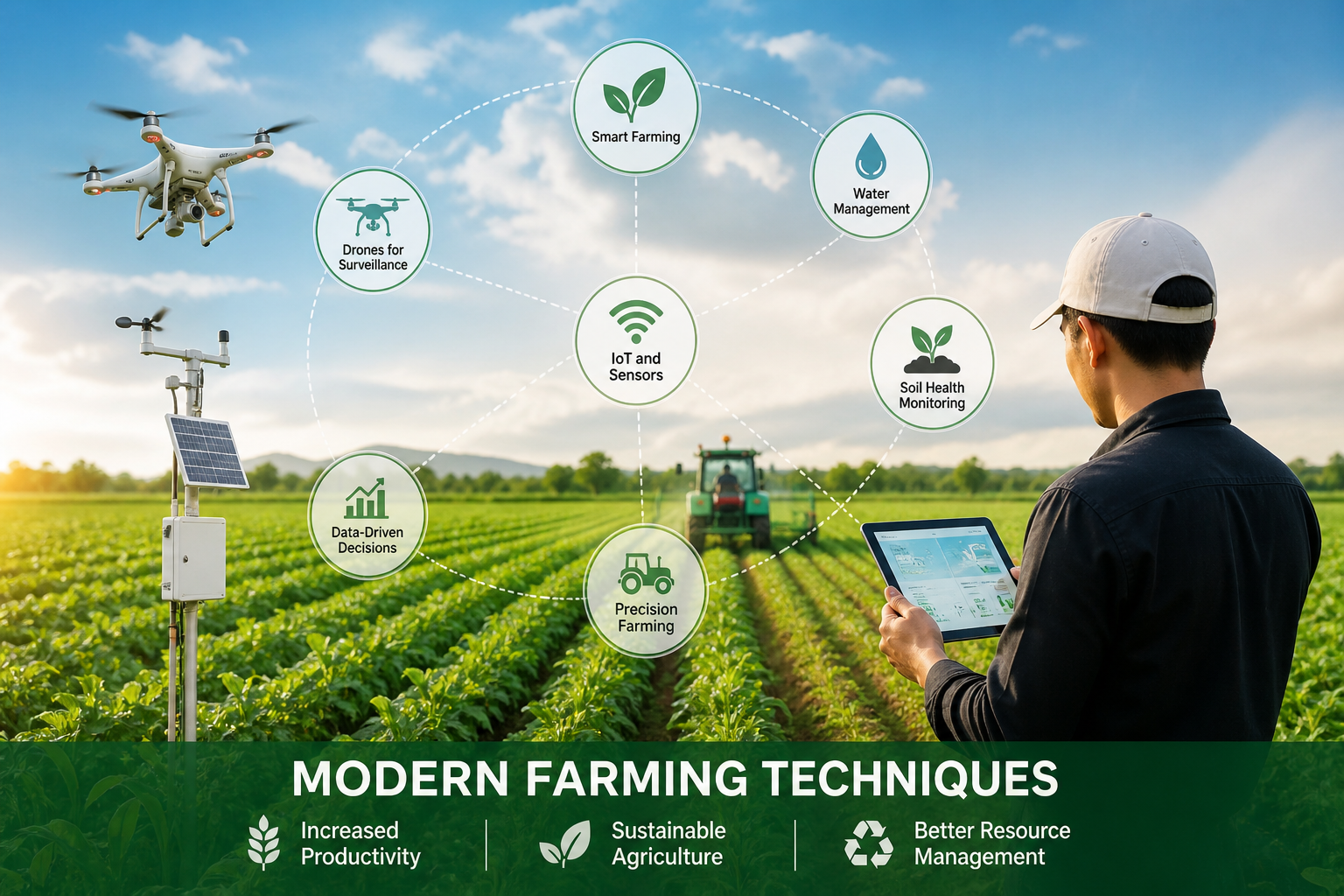
Farming has evolved significantly over the years. Traditional practices are now being replaced by smarter, more efficient, and sustainable methods. Today, farmers must adopt modern farming techniques to increase productivity, reduce costs, and protect the environment.
Whether you are a beginner or an experienced farmer, learning these techniques can help you grow better crops and earn higher profits. In this guide, we will explore the top 10 modern farming techniques that are transforming agriculture in 2026.
🚜 1. Precision Farming
Precision farming is an advanced agricultural approach that uses modern technologies such as GPS systems.
soil sensors, drones, and data analytics to monitor and manage crops with high accuracy. Instead of treating the entire field the same way, farmers can analyze specific areas of their land and apply water, fertilizers, and pesticides only where they are actually needed. This targeted approach not only improves efficiency but also reduces unnecessary input costs.
- adsfadf
- asdfasd
- fasdf
By adopting precision farming, farmers can significantly reduce the waste of water and fertilizers, which are often overused in traditional farming methods. It also helps in increasing crop yield because plants receive the exact nutrients and care they require at the right time. Additionally, this method saves both time and labor, as many processes can be automated or monitored digitally. Overall, precision farming plays a crucial role in making modern farming techniques more efficient, data-driven, and cost-effective for long-term sustainability.
asdfasdfasdf
🌱 2. Organic Farming
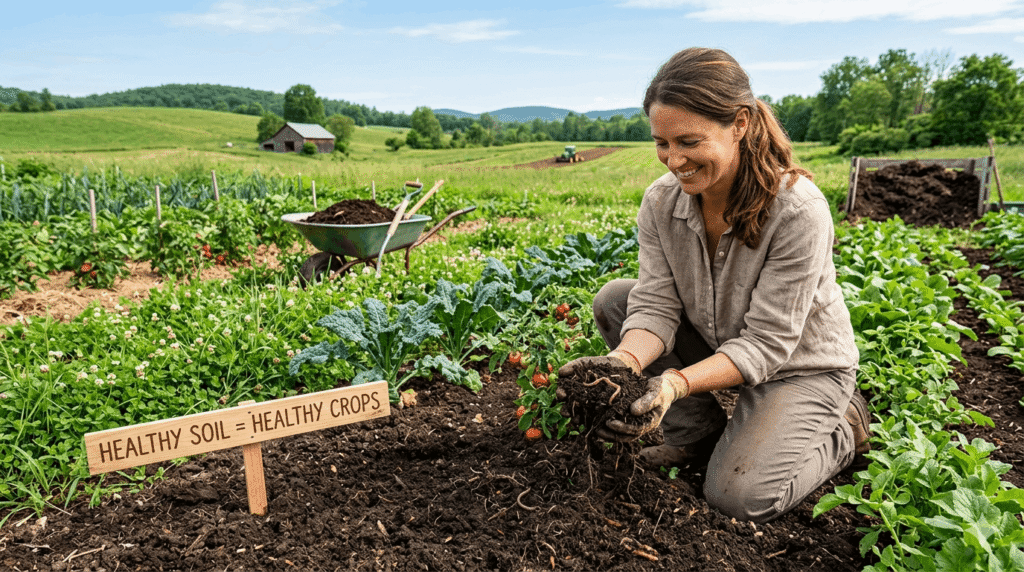
Organic farming is a natural and eco-friendly method of agriculture that avoids the use of synthetic chemicals such as artificial fertilizers, pesticides, and herbicides. Instead, it focuses on using organic inputs like compost, farmyard manure, green manure, and biological pest control methods to maintain soil fertility and protect crops. This approach works in harmony with nature and helps preserve the natural balance of the ecosystem.
One of the biggest advantages of organic farming is that it improves soil health over time by increasing organic matter and beneficial microorganisms in the soil. It also produces chemical-free and healthier food, which is becoming increasingly popular among consumers due to rising health awareness. Although organic farming may require more effort and proper management in the beginning, it offers high market demand and better price opportunities for farmers. As a result, organic farming has become one of the most trusted and widely अपनाए जाने वाले modern farming techniques for sustainable agriculture and long-term profitability.
If you want, I can expand the remaining 8 techniques in the same detailed format so your full article looks premium and ranks better in SEO 👍
💧 3. Drip Irrigation System
Drip irrigation delivers water directly to plant roots through pipes and emitters.
Benefits:
- Saves up to 60% water
- Reduces weed growth
- Improves crop quality
This is a must-use modern farming technique in water-scarce regions like many parts of India.
🌾 4. Crop Rotation
Crop rotation means growing different crops in the same field in different seasons.
Example:
- Wheat → Legumes
- Rice → Vegetables
Benefits:
- Maintains soil fertility
- Reduces pests and diseases
- Improves yield naturally
It is a simple yet powerful modern farming technique.
🧪 5. Soil Testing and Management
Soil testing and management is a crucial step in modern agriculture that helps farmers understand the exact condition of their soil before planting crops. By analyzing factors such as nutrient levels, pH balance, and organic matter content, farmers can determine what their soil actually needs instead of applying fertilizers blindly. This scientific approach ensures that crops receive the right nutrients in the correct quantities, leading to healthier plant growth and better yields.
One of the major benefits of soil testing is that it allows for proper and balanced fertilizer use, which reduces unnecessary expenses and prevents nutrient imbalances. It also helps in avoiding the overuse of chemical fertilizers, which can harm soil structure and reduce long-term fertility. Over time, proper soil management improves soil health, increases water retention capacity, and supports beneficial microorganisms. By using this modern farming technique, farmers can make informed decisions, reduce input costs, and achieve more consistent and sustainable productivity.
🌿 6. Integrated Pest Management (IPM)
Integrated Pest Management (IPM) is an environmentally responsible approach to controlling pests that combines different methods rather than relying only on chemical pesticides. It includes a mix of biological, cultural, mechanical, and limited chemical practices to manage pest populations effectively while minimizing harm to the environment. Instead of eliminating all pests, IPM focuses on keeping pest levels under control in a balanced and sustainable way.
For example, farmers can use natural predators like ladybugs to control harmful insects, practice crop rotation to break pest life cycles, and apply pesticides only when absolutely necessary. This reduces the chances of pests developing resistance to chemicals and helps maintain ecological balance. IPM also protects beneficial insects and reduces soil and water contamination. As a result, this eco-friendly modern farming technique not only reduces environmental damage but also lowers input costs and improves long-term farm sustainability.
🚜 7. Mechanized Farming
Mechanized farming involves the use of modern agricultural machinery such as tractors, harvesters, seed drills, and irrigation equipment to perform various farming operations efficiently. With increasing labor shortages and the need for faster farming processes, mechanization has become an essential part of agriculture. These machines help farmers carry out tasks like plowing, sowing, spraying, and harvesting with greater speed and precision compared to manual labor.
The use of machinery significantly reduces the dependency on human labor, which can be both costly and time-consuming, especially during peak seasons. It also ensures faster operations, allowing farmers to complete their work on time and avoid delays that can affect crop yield. In addition, mechanization improves overall productivity by enabling large-scale farming and better resource management. As a result, mechanized farming has become a key component of modern farming techniques, helping farmers increase efficiency, reduce costs, and improve overall farm profitability.
🌞 8. Smart Farming (IoT-based)
Smart farming, also known as IoT-based agriculture, is a modern approach that uses advanced technologies such as sensors, mobile applications, artificial intelligence, and automation systems to monitor and manage farm operations more efficiently. Instead of relying only on experience or guesswork, farmers can collect real-time data about weather conditions, soil moisture levels, crop health, and irrigation needs. This data-driven approach helps farmers make accurate and timely decisions that directly impact productivity.
For example, weather monitoring tools can alert farmers about upcoming rainfall or extreme conditions, while soil moisture sensors can indicate exactly when irrigation is needed. Automated irrigation systems can then supply water at the right time without manual effort, saving both water and labor. By using this advanced modern farming technique, farmers can reduce risks, optimize resource usage, and improve crop yield while maintaining better control over their farming activities.
🌾 9. Hydroponics Farming
Hydroponics farming is an innovative method of growing plants without using soil. Instead, crops are grown in a nutrient-rich water solution that provides all the essential minerals required for plant growth. This method is especially useful in areas where soil quality is poor or land availability is limited. Plants are typically grown in controlled environments such as greenhouses, where factors like temperature, light, and humidity can be carefully managed.
One of the major advantages of hydroponics is that it requires significantly less space compared to traditional farming, making it ideal for urban agriculture and indoor farming setups. Plants also grow faster because they receive nutrients directly, leading to higher yields in a shorter period. Additionally, water usage is more efficient, as it is recycled within the system. Although initial setup costs can be higher, hydroponics has proven to be a highly effective modern farming technique for maximizing productivity in controlled environments.
🌍 10. Agroforestry
Agroforestry is a sustainable farming practice that involves growing trees and crops together on the same piece of land. This integrated approach not only enhances the productivity of the land but also creates a balanced ecosystem where both plants and trees support each other. Trees can provide shade, improve soil fertility, and act as windbreaks, while crops continue to generate regular income for farmers.
One of the key benefits of agroforestry is that it improves biodiversity by creating a more natural habitat for various plants, animals, and beneficial insects. It also helps prevent soil erosion by strengthening soil structure with tree roots and reducing water runoff. Additionally, farmers can earn extra income from timber, fruits, or medicinal plants grown alongside their crops. Due to its long-term environmental and economic benefits, agroforestry is becoming an increasingly popular modern farming technique worldwide.
📊 Why Modern Farming Techniques Are Important
In today’s rapidly changing world, adopting modern farming techniques is no longer optional but essential for farmers who want to stay competitive and sustainable. Traditional farming methods alone are often not enough to meet the growing demands of food production, especially with challenges like climate change, water scarcity, and declining soil fertility. Modern techniques provide practical solutions that help farmers overcome these challenges effectively.
There are several key reasons why these techniques are important. Climate change has made weather patterns unpredictable, making it necessary to use smarter and more adaptable farming methods. At the same time, the increasing population is driving higher demand for food, requiring farmers to produce more from limited land. Natural resources such as water and fertile soil are also becoming scarce, which makes efficient usage critical. By adopting these advanced methods, farmers can increase productivity, reduce risks, and ensure long-term sustainability. Farmers who embrace these changes are more likely to achieve stable income and success in the future of agriculture.
more likely to succeed in the long run.
💡 Practical Tips for Farmers
- Start with one or two techniques first
- Use government schemes and subsidies
- Learn from local agricultural experts
- Invest gradually in technology
📈 Conclusion
The future of agriculture lies in innovation and sustainability. By adopting these modern farming techniques, farmers can improve yield, reduce costs, and protect the environment.
At FarmSarthi, we aim to guide farmers toward smarter and more profitable farming practices. Start implementing these techniques today and take your farming to the next level.