Farming is changing fast. With new technologies and better methods, farmers can increase yield, reduce costs, and manage risks more effectively. In this post, we will explore smart farming techniques that are practical and suitable for Indian conditions.
🌱 What is Smart Farming?
Smart farming means using technology, data, and modern practices to improve farming efficiency and productivity.
🚜 Top Smart Farming Techniques in 2026
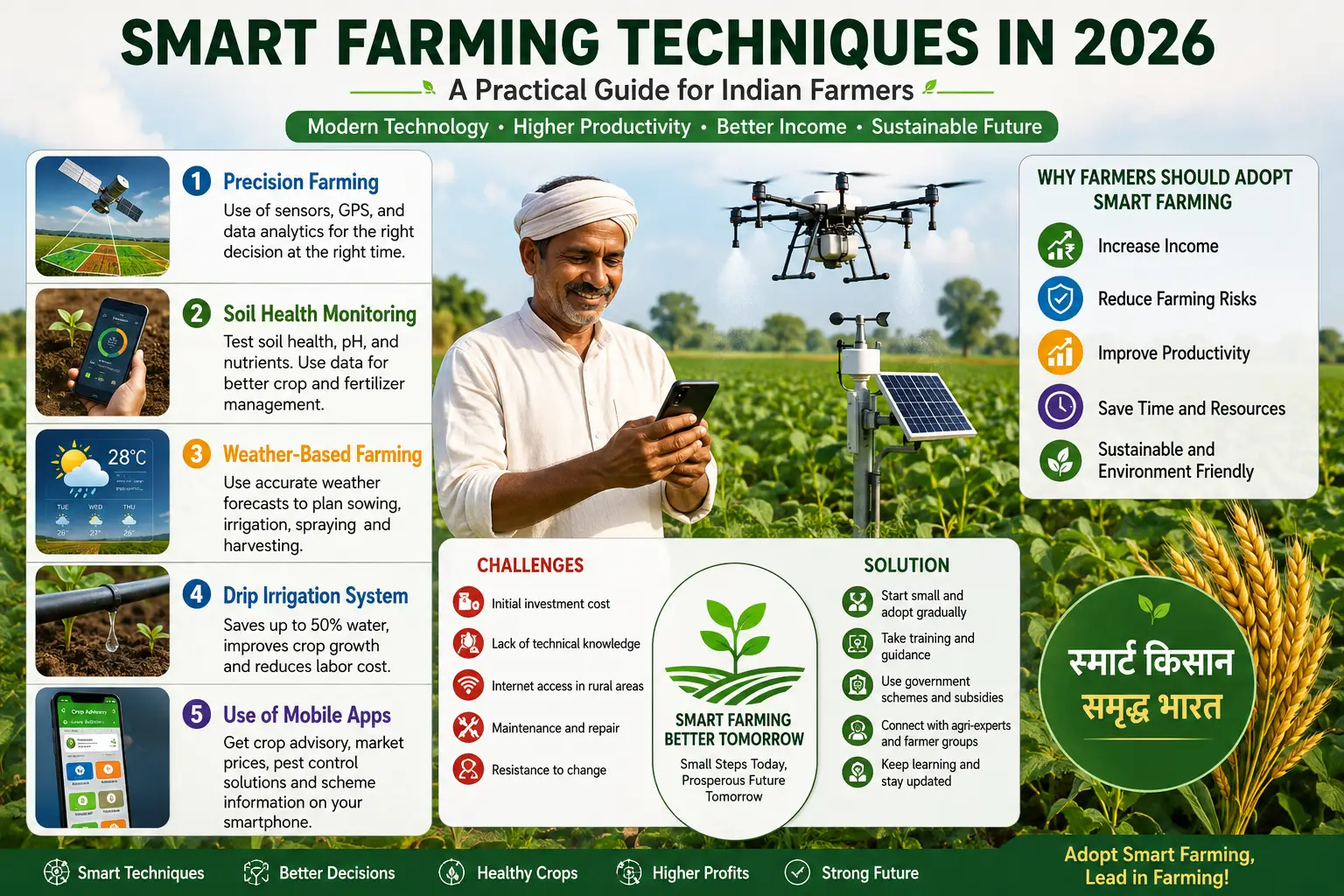
1. Precision Farming
Precision farming is one of the most advanced smart farming techniques used in 2026. This method uses modern technology, sensors, GPS mapping, drones, and real-time farm data to manage crops more efficiently. Instead of treating the entire field the same way, precision farming helps farmers understand which areas need more water, fertilizers, or pest control.
With precision farming, farmers can make accurate decisions based on soil conditions, crop health, and weather data. This not only improves productivity but also reduces unnecessary expenses.
Benefits of Precision Farming
- Better use of fertilizers and water
- Increased crop yield and crop quality
- Reduced wastage of resources
- Lower farming costs
- Improved pest and disease management
- Better monitoring of crop growth
- Higher profits for farmers
Technologies Used in Precision Farming
- GPS-based field mapping
- Drone crop monitoring
- Smart irrigation systems
- Soil moisture sensors
- AI-based crop analysis
- Satellite imaging
Why Precision Farming is Important in 2026
In 2026, rising fertilizer prices and water shortages are major challenges for Indian farmers. Precision farming helps farmers use resources carefully and improve farm efficiency. Many farmers are now using mobile apps and smart devices to monitor their fields and make better farming decisions.
2. Soil Health Monitoring
Healthy soil is the foundation of successful agriculture. Soil health monitoring is becoming an essential part of smart farming because soil quality directly affects crop growth, productivity, and long-term farm sustainability.
Many farmers face problems because of overuse of chemical fertilizers and poor soil management. Smart farming techniques now allow farmers to regularly test soil conditions and apply the correct nutrients according to crop needs.
What You Should Do for Better Soil Health
- Test soil regularly before sowing
- Use organic fertilizers and compost
- Maintain proper pH levels
- Rotate crops to protect soil nutrients
- Avoid overuse of chemical fertilizers
- Use bio-fertilizers whenever possible
- Improve soil moisture retention
Benefits of Soil Health Monitoring
- Better nutrient management
- Improved crop growth
- Increased soil fertility
- Higher crop productivity
- Reduced fertilizer costs
- Long-term sustainability of farmland
Smart Soil Monitoring Tools
Modern smart farming tools can now monitor:
- Soil moisture levels
- Nitrogen, phosphorus, and potassium levels
- Soil temperature
- Soil pH balance
Farmers can receive this information directly on their smartphones, helping them make quick and accurate decisions.
Importance of Soil Health in Smart Farming
Good soil health improves root development, water absorption, and crop strength. In 2026, more farmers are understanding that healthy soil is one of the biggest keys to profitable farming.
3. Weather-Based Farming
Weather-based farming is another important smart farming technique in 2026. Weather conditions strongly affect crop production, irrigation, pest attacks, and harvesting schedules. Unpredictable rainfall and climate change have made weather monitoring more important than ever.
Smart farming technologies now provide real-time weather updates, rainfall predictions, temperature alerts, and storm warnings directly to farmers through mobile applications and digital platforms.
Smart Practices in Weather-Based Farming
- Check weather updates daily
- Plan irrigation based on rainfall forecasts
- Protect crops during extreme weather
- Schedule pesticide spraying carefully
- Harvest crops before heavy rainfall
- Use climate-resistant crop varieties
- Monitor temperature and humidity regularly
Benefits of Weather-Based Farming
- Better farm planning
- Reduced crop damage
- Improved water management
- Lower risk of pest and disease outbreaks
- Better harvesting decisions
- Increased crop protection
Technologies Used in Weather-Based Farming
- Weather forecasting apps
- Automated weather stations
- Satellite weather monitoring
- Smart irrigation systems
- Climate prediction tools
Why Weather-Based Farming Matters in 2026
Climate change has increased the risk of droughts, floods, and irregular rainfall in India. Weather-based smart farming helps farmers reduce risks and protect their crops from unexpected weather conditions. Farmers who use weather data can plan farming activities more effectively and improve overall productivity
4. Drip Irrigation System
Water scarcity has become one of the biggest challenges in modern agriculture. In many regions, farmers struggle with irregular rainfall, declining groundwater levels, and rising irrigation costs. A drip irrigation system is one of the smartest solutions to this problem. It delivers water directly to the roots of plants through pipes and small emitters, reducing water wastage and improving efficiency.
Advantages of Drip Irrigation
- Saves up to 50% more water compared to traditional irrigation methods
- Provides water directly to plant roots for better absorption
- Improves crop growth and overall productivity
- Reduces weed growth because water is supplied only where needed
- Minimizes soil erosion and nutrient loss
- Reduces labor costs and irrigation time
- Helps maintain proper soil moisture levels
- Suitable for vegetables, fruits, sugarcane, cotton, and many other crops
Why Farmers Should Use Drip Irrigation
Farmers who adopt drip irrigation often experience healthier crops and better yields. Since plants receive a steady supply of water, they grow more uniformly and face less stress during hot weather conditions. Drip irrigation also works well with fertilizers through a process called fertigation, where nutrients are supplied directly through the irrigation system. This increases fertilizer efficiency and reduces wastage.
Although installing a drip irrigation system may require some initial investment, government subsidies and agricultural schemes are available in many areas to support farmers. Over time, the savings in water, electricity, and labor make the system highly cost-effective.
5. Use of Mobile Apps
Technology and smartphones are transforming agriculture rapidly. Today, farmers can access important farming information directly from their mobile phones. Mobile apps help farmers make smarter decisions and stay updated about weather, crop management, and market trends.
What Farming Apps Can Do
- Provide crop advisory and expert guidance
- Give daily mandi and market prices
- Offer pest and disease control solutions
- Share weather forecasts and rainfall updates
- Suggest fertilizer and pesticide recommendations
- Help farmers connect with buyers and sellers
- Provide information about government schemes and subsidies
- Offer videos and tutorials on modern farming methods
Benefits of Using Mobile Apps in Farming
Mobile apps save farmers time and improve decision-making. Instead of depending only on local information, farmers can now access scientific advice instantly. For example, if a crop disease appears, farmers can upload pictures and receive treatment suggestions quickly.
Weather updates through apps help farmers decide the best time for irrigation, sowing, spraying, and harvesting. Market price information also allows farmers to sell crops at better rates and avoid middlemen exploitation.
Many agricultural universities, government departments, and private companies now provide free or low-cost farming apps in local languages, making them easier for rural farmers to use.
📈 Why Farmers Should Adopt Smart Farming
Smart farming is becoming essential for sustainable agriculture. With increasing population, climate change, and limited natural resources, traditional farming methods alone may not be enough to meet future food demands. Smart farming helps farmers produce more while using fewer resources.
Major Benefits of Smart Farming
1. Increase Income
Modern technologies help farmers improve crop quality and production, leading to better profits. Efficient use of fertilizers, water, and labor reduces overall farming expenses.
2. Reduce Farming Risks
Weather forecasting tools, pest detection systems, and soil monitoring technologies help farmers avoid losses caused by climate and disease problems.
3. Improve Productivity
Smart farming techniques ensure crops receive proper nutrients, water, and care at the right time, resulting in higher yields.
4. Save Time and Resources
Automation and modern machinery reduce manual labor and improve efficiency. Farmers can complete tasks faster and with greater accuracy.
5. Better Decision-Making
Data-based farming allows farmers to make informed decisions instead of relying only on guesswork or traditional practices.
6. Sustainable Agriculture
Smart farming encourages efficient use of natural resources, helping protect soil fertility and water availability for future generations.
⚠️ Challenges to Consider
Although smart farming offers many advantages, farmers may also face certain challenges while adopting modern technologies.
1. Initial Investment Cost
Technologies such as drones, sensors, and drip irrigation systems can require significant investment at the beginning. Small farmers may find it difficult to afford advanced equipment.
2. Lack of Technical Knowledge
Some farmers are not familiar with digital tools or modern machinery. Proper training and awareness programs are necessary for successful adoption.
3. Internet Connectivity Issues
In many rural areas, poor internet access can limit the use of mobile apps and smart farming technologies.
4. Maintenance and Repair Costs
Modern equipment requires regular maintenance, technical support, and repairs, which can sometimes increase operational costs.
5. Resistance to Change
Many farmers still prefer traditional farming methods because they are familiar and trusted. Adopting new technologies may take time and confidence-building.
👉 Solution: Start Small and Gradually Adopt Technology
Farmers do not need to adopt every technology at once. The best approach is to start with small and affordable solutions. For example:
- Begin with soil testing and weather apps
- Use drip irrigation for a small portion of land
- Try improved seeds and balanced fertilizers
- Learn from agricultural training programs
- Watch farming tutorials online
- Take advantage of government subsidies and support schemes
Gradual adoption helps farmers understand the benefits of smart farming without taking large financial risks.
🌱 Conclusion
Smart farming is not just a temporary trend—it is the future of agriculture. As farming challenges continue to grow, modern technology offers practical solutions for improving productivity, reducing costs, and increasing farmer income.
Techniques like precision farming, soil health monitoring, weather-based farming, drip irrigation, and mobile farming apps are helping farmers work more efficiently than ever before. Even small improvements in farming practices can lead to significant long-term benefits.
Farmers who adopt smart farming early will have a competitive advantage in the future. By combining traditional knowledge with modern technology, agriculture can become more profitable, sustainable, and resilient.
The future of farming is smart, efficient, and technology-driven—and the farmers who embrace these changes today will achieve greater success tomorrow.